I have nearly finished line art for every page. Backgrounds will be next, the colour and finally text.
I still need to figure out how to make page 5 more exciting.
Wednesday, October 2, 2019

Monday, September 30, 2019
BSA127-Animation Update Part something
I FINISHED ALL THE SKETCHES. TIME TO LINEAR AND COLOUR. WOOOOOO

BSA127: Animation Update

We have like 5 weeks to finish this animation. Am I stressed? yes. Will I finish this? Absolutely.
I have two scene things to sketch out and then lineart can begin!
I think the lineart will take me maybe 1-2 weeks to do. I am exporting each thing as it is completed. I cant wait to have this finished (along with every other project) and sleep.

When this Semester is finished, I will sleep for like a week or so.
24 access is open, so I am going to utilize this. Time to bring snacks, drinks and a blanket!
BSA106:Assessment Stuff
So I realised that my original idea of using my animation wasn't going to work.
I still want to do something related to mental health and information. Therefore I have decided to create an animated poster that lists help lines.
My Pioneer is Halas and Batchelor. To incorporate them into my animation and experiments I am going to create a character styled after their Charley series.
My character is going to do a walk cycle that goes from a happy to a sad walk, I will screen capture all of my experiments and the finalising of the animation. The animation itself will be exported ready for the assessment.
I am going to focus of Anxiety and Depression as these are the most relatable for the general public.
They Happy walk will be bouncy, much like Halas and Batchelors Charley walk.
I have sketched out the walk cycle, I am adding in arms and transistions frames. I expect to have this done by the end of the week. I will be documenting it all in Blogger.
I still want to do something related to mental health and information. Therefore I have decided to create an animated poster that lists help lines.
My Pioneer is Halas and Batchelor. To incorporate them into my animation and experiments I am going to create a character styled after their Charley series.
My character is going to do a walk cycle that goes from a happy to a sad walk, I will screen capture all of my experiments and the finalising of the animation. The animation itself will be exported ready for the assessment.
I am going to focus of Anxiety and Depression as these are the most relatable for the general public.
They Happy walk will be bouncy, much like Halas and Batchelors Charley walk.
I have sketched out the walk cycle, I am adding in arms and transistions frames. I expect to have this done by the end of the week. I will be documenting it all in Blogger.
BVA103:Big Ole Post about project
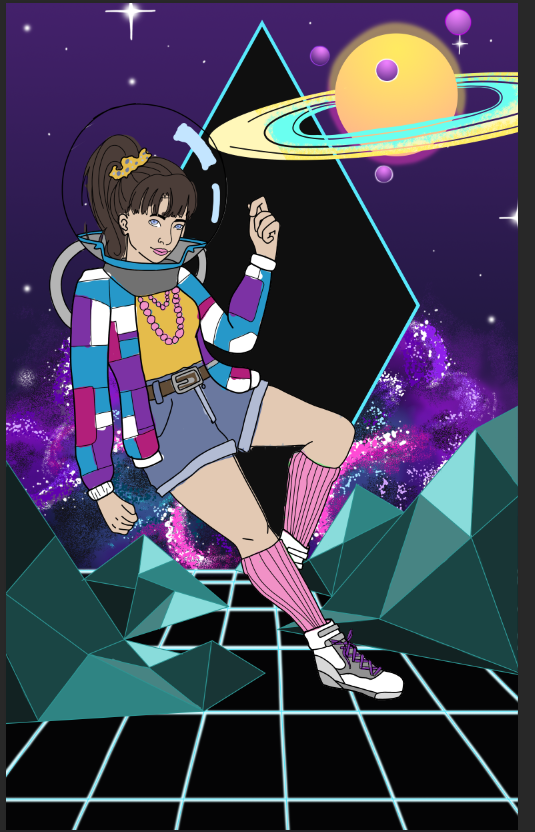
This is where my project is currently. I still need to make the body more twisted and floaty. Composition needs work.

I wasn't happy with the character, so I restarted her and made her much better. I really wasn't feeling her colours either.

I got the dancer to this stage, but I don't think I am going to complete this. I will make Space Girl fantatsic so that I have one amazing piece to submit

This was the first draft sketch of the dancer. I like the pose.

BVA103-Week 9 Task Analysing Evocative and Effective Research. Then Explaining how we work.
Define and Analyse the following terms
Effective Research (Problem-based)
Evocative practice research is the research goal to generate artefacts that 'produce affect and resonance through evocation'. (Jaaniste, L. & Hamilton, J. ,2014)
Effective Research (Problem-based)
Effective practice research pursues a solution (or resolution) to a specific problem that is important to a particular community, and it incorporates practice with the intention of producing an artefact that 'effects change'. (Jaaniste, L. & Hamilton, J. ,2014)
Evocative Research (Practice-led)
Evocative practice research is the research goal to generate artefacts that 'produce affect and resonance through evocation'. (Jaaniste, L. & Hamilton, J. ,2014)
Use the above methodologies to explain the following exemplars research projects
“Visualising Resilience”-Effective, aim was to design digital tools to complement and extend established approaches to build resilience.
“in an other light” Evocative
“More than half a life” Evocative to be effective
“Designing Sound for health and Well-being” Effective
“Investigating the Bat/Human Problem” Effective becoming Evocative
Analyse where your own project fits within the Effective/Evocative paradigms.
*Use the vocabulary learnt from the reading to describe your own project
*Reflect on what impact this reading may have on your project:
Refining your question
My question is: How can I Explore the Retro-Synthwave art Style Via a series of 2 2.5D animated pictures? I think that my question is as refined as it is going to get.
Defining your outcome/artefact
The outcome for my project will be a 2.5D animated picture that will be displayed digitally via a tv at the Think and Create Exhibition later this year.
Articulating your process of working
According to the definitions of Effective and Evocative research, my process of working leans more towards Evocative Research (practice-led). This means that I am working on creating an artefact that will produce an human response such as emotion or action, With the two artefacts I am creating I want people to respond to them both positively.
Jaaniste, L. & Hamilton, J. (2014). The Effective and the Evocative: A Spectrum of Creative Practice Research. In Barrett, E & Bolt, B. Material Inventions Applying Creative Arts Research (pp. 232-243). I.B.TAURIS.
“Visualising Resilience”-Effective, aim was to design digital tools to complement and extend established approaches to build resilience.
“in an other light” Evocative
“More than half a life” Evocative to be effective
“Designing Sound for health and Well-being” Effective
“Investigating the Bat/Human Problem” Effective becoming Evocative
Analyse where your own project fits within the Effective/Evocative paradigms.
*Use the vocabulary learnt from the reading to describe your own project
*Reflect on what impact this reading may have on your project:
Refining your question
My question is: How can I Explore the Retro-Synthwave art Style Via a series of 2 2.5D animated pictures? I think that my question is as refined as it is going to get.
Defining your outcome/artefact
The outcome for my project will be a 2.5D animated picture that will be displayed digitally via a tv at the Think and Create Exhibition later this year.
Articulating your process of working
According to the definitions of Effective and Evocative research, my process of working leans more towards Evocative Research (practice-led). This means that I am working on creating an artefact that will produce an human response such as emotion or action, With the two artefacts I am creating I want people to respond to them both positively.
Jaaniste, L. & Hamilton, J. (2014). The Effective and the Evocative: A Spectrum of Creative Practice Research. In Barrett, E & Bolt, B. Material Inventions Applying Creative Arts Research (pp. 232-243). I.B.TAURIS.
BVA103-Effective and Evocative Research
Light Reading: Material Inventions chapter on Effective and Evocative Practice Based Research. Edited by Estelle Barrett and Barbara Bolt
APA: Jaaniste, L. & Hamilton, J. (2014). The Effective and the Evocative: A Spectrum of Creative Practice Research. In Barrett, E & Bolt, B. Material Inventions Applying Creative Arts Research (pp. 232-243). I.B.TAURIS.
Summary: The differences between Effective and Evocative practice based research, how each works and what works for different people.
Evocative practice research is the research goal to generate artefacts that 'produce affect and resonance through evocation'.
APA: Jaaniste, L. & Hamilton, J. (2014). The Effective and the Evocative: A Spectrum of Creative Practice Research. In Barrett, E & Bolt, B. Material Inventions Applying Creative Arts Research (pp. 232-243). I.B.TAURIS.
Summary: The differences between Effective and Evocative practice based research, how each works and what works for different people.
Evocative practice research is the research goal to generate artefacts that 'produce affect and resonance through evocation'.
Effective practice research pursues a solution (or resolution) to a specific problem that is important to a particular community, and it incorporates practice with the intention of producing an artefact that 'effects change'.
I work in the effective practice based research. Where I have an end goal and the steps needed to create it.
Summary of Sub-Headings
The Effective and the Evocative: A Spectrum of Creative Practice Research
This section is an introduction in to the terms Effective and Evocative practice research
Evocative practice research is the research goal to generate artefacts that 'produce affect and resonance through evocation'.
The Effective and the Evocative as Distinctive Research approaches
A quick summary of the differences and similarities that each practice research has. For example, they may use the same kind of technology, fabrication or materials to create an artefact, but it is the three broad categories and how they are used that distinguish them. The three broad categories are
Difference in forming Contexts (Impetus, Questions and Aims)
This sector tells us about the fundamental difference in creative practice research that arises out of forming contexts. This is the impetus, motivation or trigger for the research project.
The primary aim of effective research is to effect change.The questions asked relate to this. To pursue the problem, one must have an in-depth understanding of the problem, its context and stakeholders in order to design the next steps, processes to design and develop a solution.
Whereas, evocative research is driven by the individual and wider cultural preoccupations. The context usually comes from from the researchers existing practice, which then remains central to the research. The research aim is not the pursuit of something specific and does not endeavor to provide a solution. The created artefact may not have an obvious function, rather it provides insight into, and contributes to the human experience (In broad terms)
Differences in Practice (Methodologies, Methods and Sequencing)
Contexts create the methodologies in which an artefact is created.
For effective research, a researcher may thoroughly analyse their contexts using ethnographic and social science methods (Observing, Interviews or focus groups) Information gained from such a practice provides a foundation for developing a set of guiding principles and processes for developing research outcomes.
When this substantial process of contextual research has been completed, practice may be initiated. The point of practice is to create an artefact that, as an instantiation of the initial research findings, will then be employed to enact or enable a solution. Then the artefact is tested in context using qualitative and quantitative methods) to evaluate its impact on the problem.
Evocative research, the research questions arises from materiality and advent of the practice. It is an ongoing dialogue between the practice, theory and topic.
Differences in Outcomes (The Artefact, Evidence and New Knowledge)
In this sub-heading, the production of new knowledge is introduced. It is fundamental to all research projects, as with out it there is no research only replication. Scrivener's (2000) article established some differences. Implementing the artefact in context allows the researcher to test and measure the efficacy and to evaluate the new knowledge produced. While the implementation of the artefact allows new knowledge to be tested, it is the knowledge invested in the artefact that is larger than this single instantiation, primary contribution to knowledge. In regards to "creative production projects" The art object does not embody a form of knowledge" (Scrivener, 2000) Scrivener's criteria for knowledge means it must be conclusive and measurable.
Knowledge is not only rational and empirical but can be philosophical, poetic and experimental.
Effective and Evocative practice Research Projects
Vaguely introducing two successful doctoral research projects from Queensland University or Technology.
An Exemplar of Effective Practice Research
An example of effective practice based research , Resilience by design: A participatory approach to designing and interactive digital application for promoting children's resilience by designer Oksana Zelenko (2012)
The project was problem based and contextual (primary school). Its research question summarized was: How can we effectively support children in acquiring resilience through and experimental digital application?
The aim was to design digital tools to complement and extend established approaches to building resilience.
It was not seen as 'practice-led' as it was only after substantial body of research that practice began. The resulting artefacts were prototype digital tools that presented a variety of interactive activities for individuals and children.
In both form and function they were instant ions of the concepts, interaction design principles and methods of participation.
An Exemplar of Evocative Practice Research
Hybrid Research practices that Combine Effective and Evocative Approaches
Harnessing the Evocative to be Effective
Transposing and Evocative Practice into and Effective Research Project
An Effective Research Approach becomes Evocative
Conclusion
Interesting bits:
I work in the effective practice based research. Where I have an end goal and the steps needed to create it.
Summary of Sub-Headings
The Effective and the Evocative: A Spectrum of Creative Practice Research
This section is an introduction in to the terms Effective and Evocative practice research
Evocative practice research is the research goal to generate artefacts that 'produce affect and resonance through evocation'.
Effective practice research pursues a solution (or resolution) to a specific problem that is important to a particular community, and it incorporates practice with the intention of producing an artefact that 'effects change'.
The Effective and the Evocative as Distinctive Research approaches
A quick summary of the differences and similarities that each practice research has. For example, they may use the same kind of technology, fabrication or materials to create an artefact, but it is the three broad categories and how they are used that distinguish them. The three broad categories are
- Differences in the forming contexts of the research
- Differences in practice
- Differences in outcomes
Difference in forming Contexts (Impetus, Questions and Aims)
This sector tells us about the fundamental difference in creative practice research that arises out of forming contexts. This is the impetus, motivation or trigger for the research project.
The primary aim of effective research is to effect change.The questions asked relate to this. To pursue the problem, one must have an in-depth understanding of the problem, its context and stakeholders in order to design the next steps, processes to design and develop a solution.
Whereas, evocative research is driven by the individual and wider cultural preoccupations. The context usually comes from from the researchers existing practice, which then remains central to the research. The research aim is not the pursuit of something specific and does not endeavor to provide a solution. The created artefact may not have an obvious function, rather it provides insight into, and contributes to the human experience (In broad terms)
Differences in Practice (Methodologies, Methods and Sequencing)
Contexts create the methodologies in which an artefact is created.
For effective research, a researcher may thoroughly analyse their contexts using ethnographic and social science methods (Observing, Interviews or focus groups) Information gained from such a practice provides a foundation for developing a set of guiding principles and processes for developing research outcomes.
When this substantial process of contextual research has been completed, practice may be initiated. The point of practice is to create an artefact that, as an instantiation of the initial research findings, will then be employed to enact or enable a solution. Then the artefact is tested in context using qualitative and quantitative methods) to evaluate its impact on the problem.
Evocative research, the research questions arises from materiality and advent of the practice. It is an ongoing dialogue between the practice, theory and topic.
Differences in Outcomes (The Artefact, Evidence and New Knowledge)
In this sub-heading, the production of new knowledge is introduced. It is fundamental to all research projects, as with out it there is no research only replication. Scrivener's (2000) article established some differences. Implementing the artefact in context allows the researcher to test and measure the efficacy and to evaluate the new knowledge produced. While the implementation of the artefact allows new knowledge to be tested, it is the knowledge invested in the artefact that is larger than this single instantiation, primary contribution to knowledge. In regards to "creative production projects" The art object does not embody a form of knowledge" (Scrivener, 2000) Scrivener's criteria for knowledge means it must be conclusive and measurable.
Knowledge is not only rational and empirical but can be philosophical, poetic and experimental.
Effective and Evocative practice Research Projects
Vaguely introducing two successful doctoral research projects from Queensland University or Technology.
An Exemplar of Effective Practice Research
An example of effective practice based research , Resilience by design: A participatory approach to designing and interactive digital application for promoting children's resilience by designer Oksana Zelenko (2012)
The project was problem based and contextual (primary school). Its research question summarized was: How can we effectively support children in acquiring resilience through and experimental digital application?
The aim was to design digital tools to complement and extend established approaches to building resilience.
It was not seen as 'practice-led' as it was only after substantial body of research that practice began. The resulting artefacts were prototype digital tools that presented a variety of interactive activities for individuals and children.
In both form and function they were instant ions of the concepts, interaction design principles and methods of participation.
An Exemplar of Evocative Practice Research
Hybrid Research practices that Combine Effective and Evocative Approaches
Harnessing the Evocative to be Effective
Transposing and Evocative Practice into and Effective Research Project
An Effective Research Approach becomes Evocative
Conclusion
Interesting bits:
- The context of the project creates the types of questions asked and research aims. These inflects the approach and role that the resulting artefact plays in the research outcomes.
Unfamiliar terms
- extrapolated
- conflation
- eliding
- engender
- empirical
- irreducible
- dichotomy
- impetus
- in situ
- phenomenology
- socio-politcal
- ethnographic
- instantiation
- iterative
- instantiations
- exegesis
- interim
- efficacy
- extrapolate
- efficacious
- reducible
- exemplified
- inherent
- antiphonic
- perceptual
- delimited dichotomy
- hybridity
- instrumentality
- axiomatic
I work in the effective practice based research. Where I have an end goal and the steps needed to create it.
Subscribe to:
Posts (Atom)